
Instrumentation/Signal Cables
Instrumentation cables are specialized electrical cables used in industrial and commercial applications for transmitting control signals, low-level power, and data. These cables are used to connect process control and monitoring instruments, such as sensors, transducers, and control systems. Instrumentation cables are designed to meet the specific requirements of different applications, including harsh environmental conditions and electromagnetic compatibility. They can be made of various materials, including copper and have insulation made of materials such as PVC & XLPE & PE. The shielding and grounding of instrumentation cables are also important factors in ensuring reliable and accurate signal transmission. Instrumentation cables must meet specific performance and safety standards to ensure that they can provide reliable signal transmission and to minimize the risk of damage or failure. When selecting instrumentation cables, it is important to consider the specific requirements of the application, including the type of signal being transmitted, the length of the cable needed, and any environmental factors that may impact the cable’s performance.
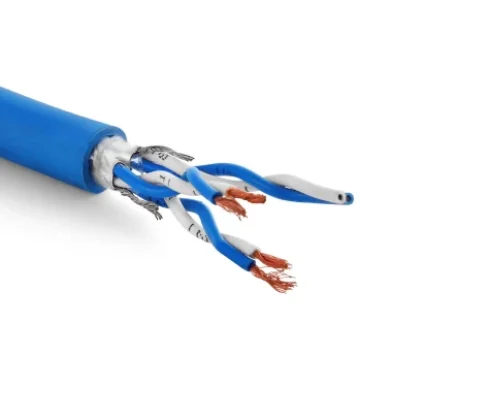
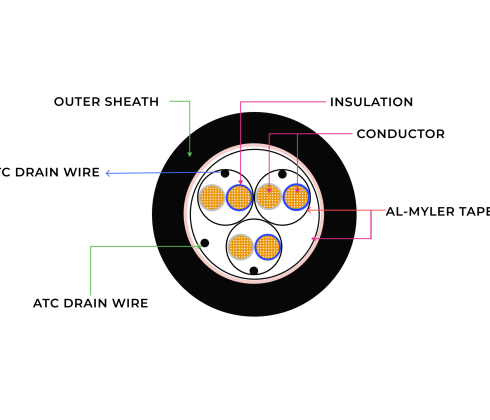
PVC / XLPE / PE insulated cables conforming / as per BS EN: 50288 (formerly BS:5308-I & II), IEC-60502-1, IS: 1554-I, IS:7098-I, EIL6-52- 46 and Customer specific requirement.
- Conductor : Solid/ stranded/ flexible copper, (bare / tinned).
- Insulation : PVC-GP / HR, PE, XLPE, FRLS-H LSZH.
- Shielding : Individual & overall or overall screen only by Al-mylar tape/ Copper tape/ copper wire braid.
- Inner Sheath : PVC-GP / HR/ FR / FRLS-H, PE, LSZH.
- Armour (for Armoured Cables) : Galvanised steel wire / strip / tape/ double tape / Braid.
- Outer Sheath : PVC-GP / HR/ FR / FRLS-H, LSZH.
Generally to be Manufactured with sizes 0.50 Sq.mm, 0.75Sq.mm, 1 .OSq.mm, 1.5 Sq.mm, 2.5 Sq.mm up to 50 pairs/Triad.
- Shielding : Instrumentation cables may be shielded with materials such as aluminum foil or copper wire mesh to provide protection against electromagnetic interference (EMI) and radio frequency interference (RFI), which can degrade signal quality.
- Conductor material : Instrumentation cables are typically made of copper, which is a good conductor of electricity.
- Insulation material : Instrumentation cables are insulated with materials such as PVC (Polyvinyl chloride), XLPE (Cross-linked polyethylene), PE (Polyethelene) , or FEP (Fluorinated ethylene propylene) , which provide good electrical insulation and mechanical strength.
- Color coding : Instrumentation cables may be color-coded to facilitate identification and installation.
- Low capacitance : Instrumentation cables are designed to have low capacitance, which minimizes signal loss and distortion.
- Noise immunity : Instrumentation cables are designed to have high noise immunity, which ensures accurate signal transmission in noisy environments.
- PVC : Polyvinyl Chloride.
- XLPE : Cross Linked Polyethylene.
- HR : Heat resistant.
- FR : Flame Retardant.
- FRLS : Flame Retardant Low Smoke.
- LSZH : Low Smoke Zero Halogen.
- PE : Polyethylene.
Corporate / Sales & Marketing Office
SF-1, 1st Floor, Bhikaji Cama Bhawan, Bhikaji Cama Place,
Delhi 110066, India
Works
F-83+84, Riico Industrial Area, Kushkhera, Bhiwadi, Alwar, Rajasthan 301019, India